
Blog, News, Tips and Tricks
From Medieval Fire Pits to Modern Braai: The Real Story of the Flambadou

Dec
Why the Flambadou Is Not Just a Gimmick
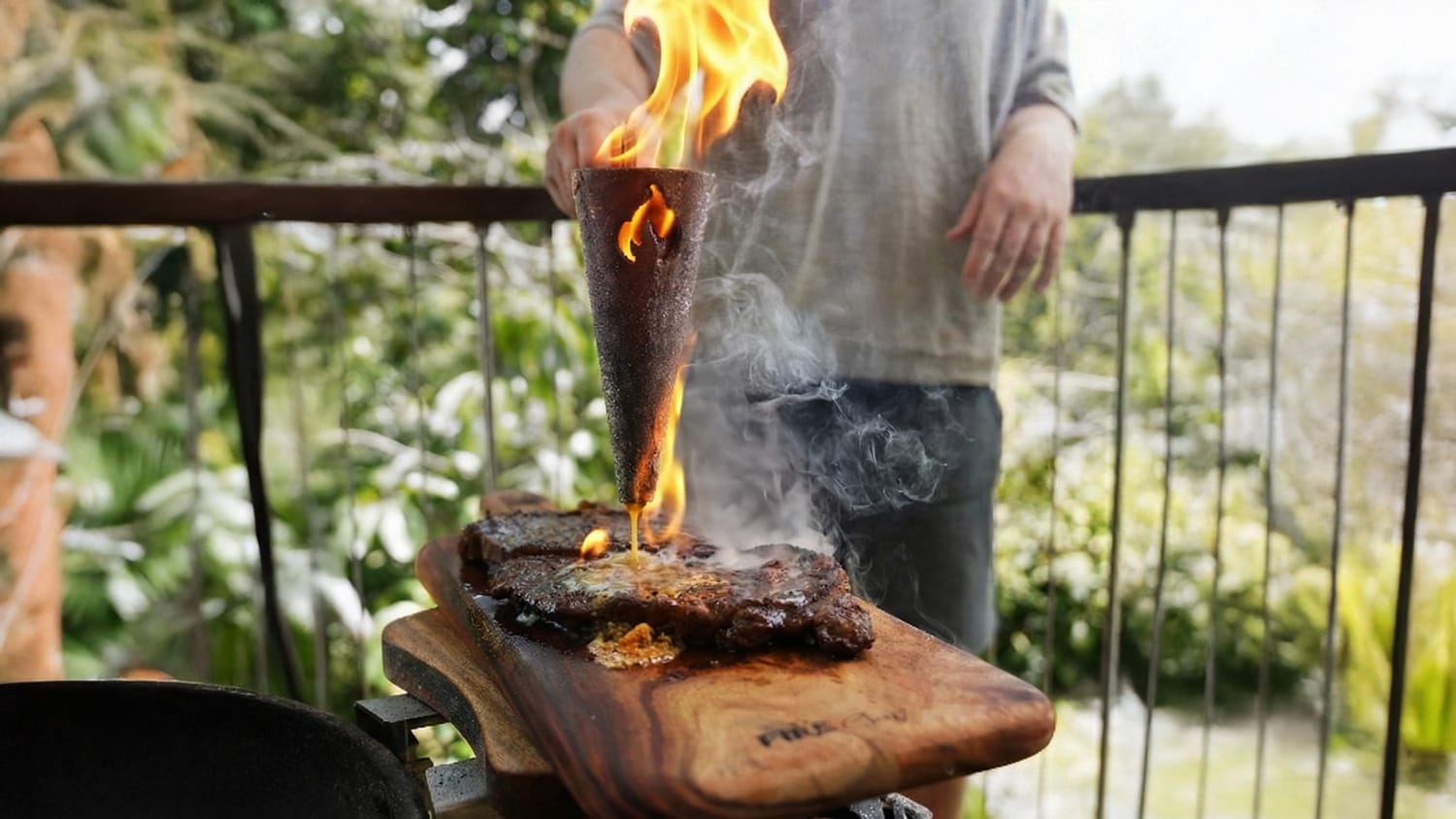
Picture a thick ribeye resting over hardwood coals. The fat cap has started to soften, the edges are taking on colour, but you know it could be better. You plunge a heavy iron cone into the heart of the fire until it glows, then drop in a knob of beef fat. In an instant it ignites, erupts into a stream of flaming droplets, and rains down over the steak. The surface hisses, the aroma shifts from “nice” to “what on earth is that”, and the crust jumps to another level.
That is not a gimmick. That is a flambadou used properly.
What Exactly Is a Flambadou?
The flambadou is a traditional French cooking tool, a long iron or steel rod with a cone on the end, pierced by a small hole. It is heated white hot in the fire, then used to melt and ignite fat which drips in a controlled stream over food that is cooking below.
Historically, it was used to melt lard or other animal fat over large joints of meat roasting on a spit, giving them the distinctive flavour of flaming fat and smoke. In French it is also known as a flamboir, coqueron, cocuron or capucin. The tool has been documented in French kitchens since the Middle Ages and survives most strongly in parts of southern France, particularly Aveyron, where it is still known as a flambadou, from the Occitan word flambador.
So at its core, the flambadou is not a novelty gadget. It is a medieval basting system designed for open fires that modern chefs and braai lovers are rediscovering.
A Short History: From Medieval Hearths to Modern Braai
Experts in culinary history cannot pinpoint the exact birthplace or date of the flambadou, but the consensus is clear. It is an old French tool that emerged around the Middle Ages in regions where open hearth cooking and spit roasting were central to daily life.
In those kitchens:
- Meat was often roasted on a horizontal spit in front of or over the fire.
- Animal fat was precious and never wasted.
- Cooks wanted a way to baste meat with fat while also increasing flavour and browning.
The flambadou solved all three problems. The long handle kept the cook safe from the flames, the cone focused heat so the fat ignited quickly, and the small opening at the tip turned liquid fat into a controlled shower of fire over the meat. This was especially useful for pork or poultry with a fat layer that could be crisped, or for leaner meats that needed additional fat on the surface for flavour and colour.
Over time, as open hearths disappeared from most homes and roasting shifted to enclosed ovens, flambadous fell out of common use. They survived mostly in rural pockets and in the memory of older cooks.
Fast forward to the last decade:
- Chefs searching for more primal fire techniques began digging into old European tools and methods.
- The flambadou resurfaced in fine dining, particularly in the work of fire focused restaurants, where chefs use it to finish dishes like oysters with molten beef fat, giving them a rich, smoky finish.
- Artisan blacksmiths and fire cooking enthusiasts began forging modern versions and showing them off at festivals, on YouTube, and across social media.
What looks “new” and theatrical on Instagram is actually an old piece of French ingenuity that has simply been moved from medieval hearth to modern braai.
Why the Flambadou Is Not Just a Party Trick
If you strip away the flames and the show, the flambadou is doing three very serious things for your food.
1. It Supercharges Browning and Flavour
The heart of great braai meat is the crust, that dark, savoury, deeply aromatic surface that makes everyone hover over the grid. Most of that magic comes from the Maillard reaction, the set of chemical reactions between amino acids and sugars that create the flavours and aromas of browned food.
For Maillard browning to really kick off, you need:
- High, dry heat
- A relatively dry surface
- Good contact with hot fat or hot air
The flambadou helps on every front. The cone is heated to extreme temperatures in the coals. The fat that runs out is already super hot and partially combusting. When that flaming fat hits the meat, it instantly dehydrates the surface in tiny spots, boosts temperature, and spreads heat and flavour across uneven surfaces.
Fats are known to act as catalysts for browning because they transfer heat efficiently and help the surface of the meat become dry enough for Maillard reactions to accelerate. With a flambadou, you are effectively pouring a moving, high temperature film of fat over the meat, so fresh areas of the surface are constantly pushed into that prime browning zone.
The result is not just more colour. It is deeper flavour, more complexity, and a crust that tastes like it came from a professional wood fired kitchen rather than a rushed weeknight braai.
2. It Layers Smoke and Fat in a Way You Cannot Easily Mimic
You can brush fat, spoon pan juices, or mop with butter. All of that adds flavour. The flambadou, however, combines three flavour builders at once:
- Rendered fat from your chosen animal
Beef tallow on steak, lamb fat on chops, marrow on oysters, duck fat on chicken. The fat carries unique fat soluble flavour molecules from that animal’s diet and tissue. - Live flame contact
As the fat ignites in the cone and again as it hits the hot meat, it partially combusts. That controlled combustion produces a mix of smoky, roasted, sometimes faintly caramelised notes you cannot get from simple brushing. - Real wood or charcoal smoke
The hot fat sizzles and vaporises on the surface, mixing with the smoke passing over the meat. The flavours of the wood and the fat intertwine right at the crust.
This is why traditional use of flambadous focused on meats with skin or fat layers. The goal was not just to crisp the skin but to marry smoke, flame and fat into a single, intense layer of flavour.
You can get good results with a brush or spoon. You cannot replicate the way flaming droplets strike and sear tiny micro areas of the meat in milliseconds. That is unique to a tool like the flambadou.
3. It Gives You Precise Control Over Where and When the Magic Happens
One of the most underrated features of the flambadou is control.
You choose:
- When to baste, early to help a pale piece of meat start browning, or later to finish with a burst of flavour.
- Where to baste. You can focus on edges that are lagging behind the centre, hit fatty caps you want crisp, or give special treatment to one side of a chop or steak.
- What to baste with. Pure beef tallow, lamb fat, bacon ends, bone marrow, compound butter or seasoned fat.
Modern guides even recommend using flambadous to finish vegetables, bread, and seafood in addition to meat. Oysters finished with flaming beef fat have become a signature dish in some fire driven restaurants.
On a braai, that flexibility is huge. You do not need to move the meat off the grid, you do not need to juggle pans, and you do not dilute the fire’s flavour with liquid marinades. You simply bring the cone over, tilt, and paint with fire.
“It Is Just for Show” and Other Objections, Answered
Any tool that throws flames around will attract sceptics. It is worth taking the most common objections head on.
“It Looks Cool but It Does Nothing I Cannot Do with a Spoon”
A spoon or brush can certainly add fat and help with browning. Where they fall short:
- They apply fat at a much lower temperature. You are limited by the temperature of the pan or drip tray.
- They cannot create the same contact of burning fat with the meat surface.
- They do not maintain that thin, super hot film moving across the surface that pushes browning so aggressively.
Put bluntly, a spoon is a delivery method. A flambadou is both a delivery method and a thermal weapon. It changes the heat profile at the surface, not just the fat level.
“It Is a Medieval Curiosity, There Is No Serious Pedigree”
The flambadou is precisely the opposite of a shallow novelty. It has:
- Centuries of use in French kitchens for roasting and basting over open fires.
- Documented survival in regional cooking in Occitanie, particularly Aveyron.
- A modern revival in serious restaurants where chefs are under intense scrutiny. It is not an empty trend if high level kitchens are using it as part of their core fire cooking technique.
If all it offered was spectacle, it would have disappeared completely in the shift to more efficient modern cooking. The fact that it is being revived by people obsessed with flavour, not nostalgia, says everything.

Free recipe ebook
Get our free braai recipe ebook
Braai Time: South African recipes, techniques and cuts, sent straight to your inbox.
“It Is Unsafe and Messy”
Used carelessly, it can be. So can a chimney starter, a cast iron Dutch oven full of oil, or a roaring wood fired oven.
The flambadou has safety built in:
- The handle is long to keep your hands well away from the fire.
- The small opening at the tip limits the flow of fat, turning it into a controlled stream rather than a dump.
With sensible precautions, clear space around the grid, guests kept back, a safe stand for the hot cone, and gloves, it is no more hazardous than any other serious fire tool. The rule is simple, treat it with respect, just as you do with any live fire kit.
“It Is Overkill for Home Cooks”
This argument evaporates as soon as you taste properly flambadou basted food.
More importantly, the flambadou actually simplifies some things for the home braai cook:
- You do not need extra pans on the side to melt and hold fat.
- You can cook lean cuts on the open grid and still get the richness and crust of a fattier piece.
- You turn offcuts of fat, marrow bones, or bacon ends into a high value flavour bomb instead of letting them go to waste.
Once you understand the rhythm, heat cone, add fat, baste, return cone to the coals, it becomes as natural as turning chops or testing boerewors.
How the Flambadou Fits Naturally into Braai Culture
Braai is about more than feeding people. It is about fire, ritual, and theatre. The flambadou slots into that culture almost suspiciously well.
A Tool Built for Open Fire, Not for Stoves
Most modern kitchen gadgets are designed to fix the limitations of electric or gas stoves. The flambadou is the opposite. It only makes sense when you have live coals and flame.
That is exactly the environment of the braai:
- A deep bed of coals to heat the cone until it is glowing.
- Space to work above the grid.
- Meat already carrying the smoke and heat of the fire.
On a gas barbecue it works, but it is slightly out of place. On a proper wood or charcoal braai, it feels like it has come home.
It Honours Nose to Tail and “No Waste” Cooking
Traditional braai already leans toward using what you have. The flambadou lets you:
- Save trimmings from brisket, ribeye, lamb shoulder or pork belly and turn them into basting fat.
- Render fat that might otherwise drip away into the fire and reclaim it as flavour.
- Use marrow and other rich fats that are hard to manage in a pan on the braai.
This lines up with old European practice, where animal fat was precious and tools like the flambadou ensured none of it went to waste.
It Creates a Moment
Great braais always have a moment:
- The first sparks when the wood takes.
- The first sizzle when meat hits the grid.
- The silence when everyone bites into the first chop.
The flambadou gives you another one. When you lift that glowing cone out of the coals and fat bursts into a ribbon of fire, every head turns. There is awe, a bit of danger, and anticipation. Then you serve meat that actually tastes better, and the moment is anchored by real flavour, not just spectacle.
That is the opposite of a gimmick. That is craft with showmanship.
Practical Ways to Use a Flambadou on the Braai
To bring all of this down to earth, here is how a flambadou can earn its place next to your tongs and grid.
Finishing Steaks
Cook thick steaks to just under your target doneness. While they rest briefly on the cooler side, heat the flambadou until it is glowing. Add beef tallow or trimmed steak fat and baste each steak with a brief shower of flaming fat. You will see the crust darken and hear the immediate sizzle.
Crisping Lamb Fat
Braai lamb chops or a lamb rack until the meat is nearly where you want it. Use lamb fat or tallow in the cone and focus the stream on the fat caps and edges. The fat becomes glassy and crisp, with a pronounced smoky lamb flavour.
Elevating Boerewors or Sausage
Once the wors is cooked through and lightly coloured, give it a quick flambadou finish with beef or pork fat. The surface tightens, the colour deepens, and the aroma jumps.
Making “Fire Butter” for Bread and Vegetables
Load the flambadou with a simple herb butter and finish slices of bread, roosterkoek, or even charred cabbage wedges. The butter sizzles and toasts on contact, giving a flavour that is far beyond ordinary garlic bread.
Seafood Experiments
For the adventurous, follow the lead of fire driven restaurants and try oysters or prawns finished with flaming marrow or beef fat. The sea meets smoke and beef in a way that has to be tasted to be believed.
In every case, the flambadou is serving a clear purpose, concentrating fire and fat exactly where you want it.
Why the Flambadou Deserves Respect, Not Dismissal
When people call the flambadou a gimmick, they are usually reacting to the flames and the social media clips, not to the underlying technique. Strip away the drama and you have:
- A medieval French tool with centuries of use in real kitchens.
- A scientifically sound way to intensify Maillard browning and fat driven flavour on the surface of food.
- A method that is perfectly suited to open fire cooking and braai culture.
- A way to honour nose to tail cooking by turning scraps of fat into liquid gold.
Gimmicks look good but change nothing. The flambadou looks spectacular and changes everything about the crust, aroma, and flavour of whatever passes under that stream of flaming fat.
Treat it with the same respect you give your grid, your tongs and your fire, and it will quietly prove that it is not a toy. It is one of the oldest, cleverest tools you can bring back to life on your braai.
Shop the Gear