

Blog, Tips and Tricks
Carbon Steel Knives: The Working Cook’s Secret Weapon
Nov
If you ask serious chefs, butchers and sharpening experts what they actually use at the bench, carbon steel knives come up again and again. They are not the shiniest or the most “maintenance free”, but they are often the sharpest, most predictable tools you can own.
Below is a detailed look at why carbon steel is so good in the kitchen, with clear, practical facts rather than marketing fluff.
What Carbon Steel Actually Is
“Carbon steel” is a family of steels with:
- Higher carbon content than most stainless kitchen steels (often around 0.8–1.2 % carbon in traditional knife steels)
- Very little or no chromium (usually under 3 %, often under 1 %), so it is not stainless
That higher carbon content lets the steel be hardened more, which is directly linked to:
- A thinner, keener edge
- Better edge retention
- A more responsive feel on the stone when sharpening
Common traditional knife steels such as White Paper (Shirogami), Blue Paper (Aogami) or 1095 are classic examples of high carbon steels used in kitchen knives.
1. Sharper Edges: Why Carbon Steel Feels “Surgical”
Higher hardness
Because of the extra carbon, carbon steels can be heat treated to relatively high hardness levels (often around 60–65 HRC for many Japanese blades, compared with 55–58 HRC for many mass market stainless knives). Higher HRC means the edge deforms less under load, so it can be ground thinner and still hold up in normal use.
In practice, you get:
- Very fine edge geometry (sharper angle at the edge)
- Less “rolling” and mushing of the edge when cutting
- More aggressive bite, especially on tomato skins, onion, meat and fibrous veg
Finer grain structure
Many traditional carbon steels have a very fine and simple microstructure. There are fewer large, hard carbides compared with some stainless “super steels”.
The benefits in the kitchen:
- The edge can be polished very finely, which gives you that “lightsabre through an onion” feel
- Microchipping is reduced when the heat treatment and geometry are done properly
- You can get a crazy sharp, almost razor-like edge that is very hard to achieve on cheaper stainless blades
2. Honest Edge Retention
You will often hear that some stainless steels “stay sharp forever”. What usually happens is that:
- They stay in a “not totally blunt but not really sharp” state for a long time
- They feel toothy, but never truly keen unless sharpened very carefully on aggressive stones
Carbon steel behaves differently:
- It takes a very keen, refined edge quickly
- It retains that high level of sharpness over a good amount of real cutting (service after service in a pro kitchen, or many meals at home)
- When it finally fades, it comes back fast with a few strokes on a stone or strop
So perceived edge retention is excellent, because the cycle from “scary sharp” to “a bit dull” to “scary sharp again” is short and predictable.
3. Easier, Faster Sharpening
This is one of the biggest practical advantages, especially if you sharpen by hand.
Why carbon steel is pleasant to sharpen
- The carbides are usually finer and more evenly distributed than in many high alloy stainless steels
- The steel cuts cleanly on waterstones, creating a clear burr that you can feel and control
- You do not need ultra-hard, expensive stones to move metal effectively
Benefits for the user:
- Fewer strokes to raise a burr
- Easier to feel what is happening during sharpening
- Less frustration, more consistent results
If you are teaching yourself to sharpen, carbon steel is by far the easiest way to learn good technique because the feedback is so clear.
4. The Patina: Natural Protection Instead of Coating
Because there is little chromium, carbon steel is reactive. It will:
- Darken with use, especially with acidic foods like onions, tomatoes and citrus
- Develop a grey, blue or even slightly rainbow patina over time
This patina is not just cosmetic. It:
- Acts as a mild protective layer against further corrosion
- Reduces metallic taste transfer on foods
- Tells you the knife is settling into its working life
Instead of a factory-applied coating that might chip or peel, the blade develops its own “living” surface that fits the way you cook. Many chefs take pride in the patina as a sign of a well used, well loved tool.
5. Precision And Feedback At The Board
Carbon steel knives tend to feel more “connected” to what you are cutting. That is partly because of the sharpness and geometry, but also because of the stiffness and vibration characteristics of the steel.
What that means for you:
- When you cut, you feel exactly when the edge contacts the board and how it moves through food
- Fine work such as trimming sinew, turning veg, or cutting very thin slices feels more controlled
- There is less tendency for the blade to skate on smooth surfaces like tomato skin or fish skin
This feedback loop between your hand, the knife and the food is a big reason why professionals get attached to particular carbon steel blades.
6. Better For Certain Cutting Styles
Some cutting styles make especially good use of carbon steel:
- Push cutting and chopping: The keen, straight edge powers through veg with minimal effort
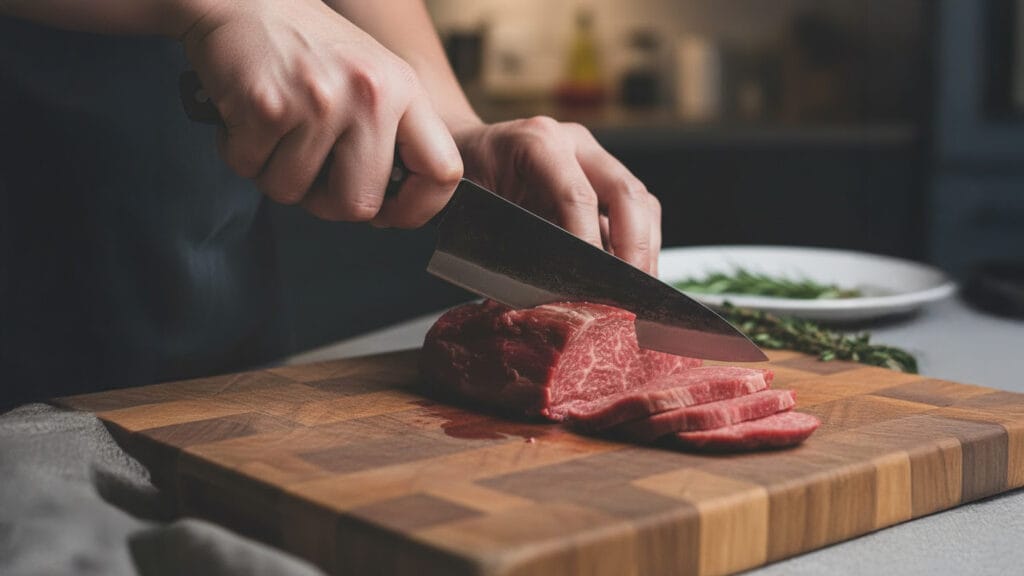
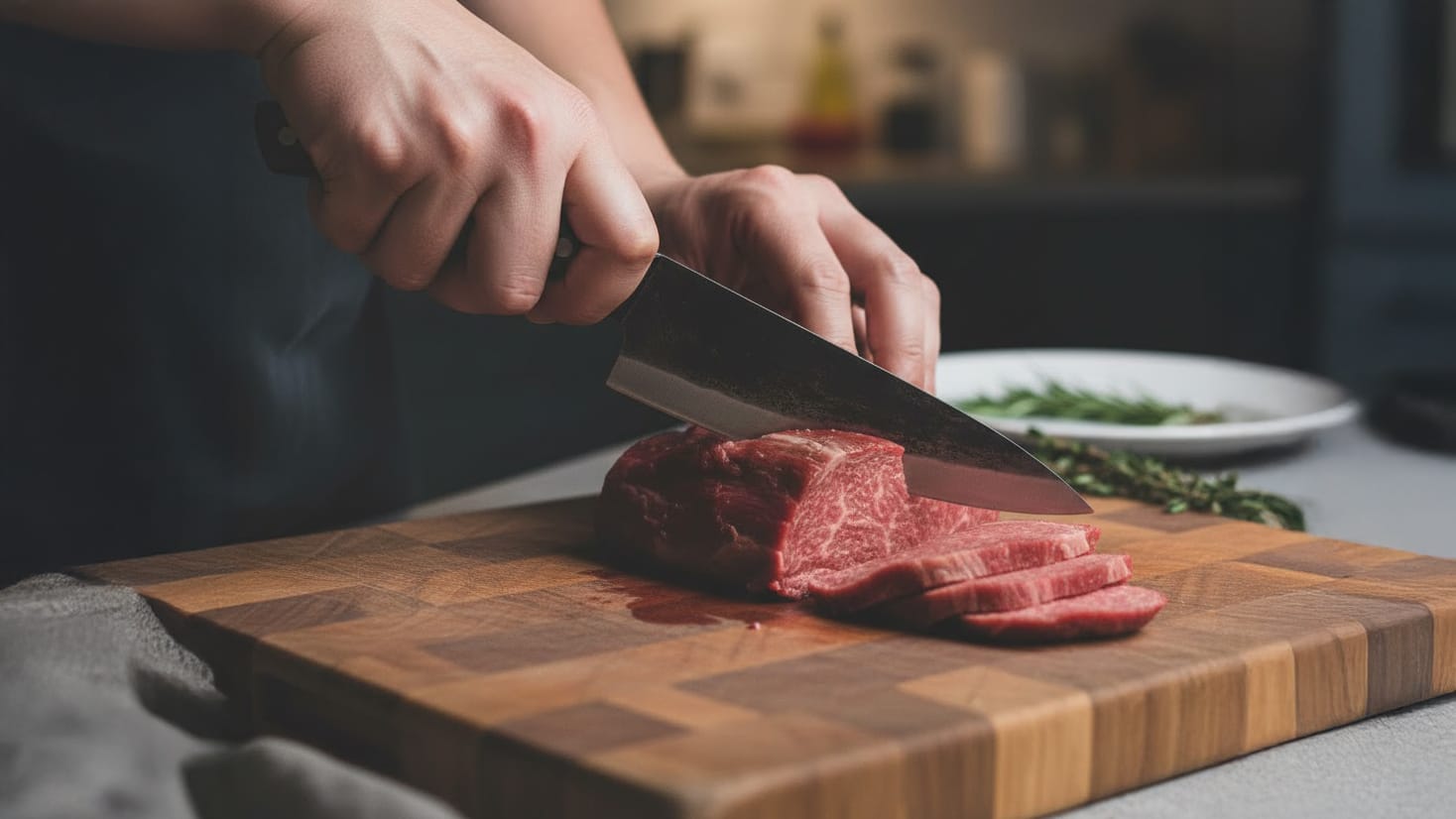
- Slicing proteins: A highly polished carbon edge glides through meat and fish, leaving very clean surfaces
- Single bevel tasks (for traditional Japanese knives): Carbon steel takes a mirror polished bevel and a crisp edge line, ideal for precise cuts in sushi and kaiseki style dishes
In these contexts, cheap stainless simply cannot compete with a properly sharpened carbon blade.
7. Durability When Treated As A Tool, Not A Gadget
People sometimes think carbon steel is fragile because it can rust. In reality, the underlying steel is tough and durable if used correctly:
- The core material is strong and resists permanent deformation
- The edge will not roll into a wavy mess as quickly as softer steels
- Small scratches and marks are cosmetic only and tend to blend into the patina over time
If you avoid abuse (no frozen food, bones, glass or granite worktops) and follow basic care, the blade will genuinely last decades, often outliving its first owner.
8. Simple, Predictable Care Routine
You do not need any special equipment or rituals. The essentials are:
-
During use
-
Wipe the blade if it is sitting unused with acidic food juices on it.
-
-
After use
-
Wash promptly with warm water and a tiny amount of mild detergent.
-
Dry thoroughly with a cloth.
-
-
For storage
-
In humid environments, wipe a very thin layer of food safe oil on the blade, especially before putting it away for a while.
-
Store it in a block, on a magnetic strip or in a saya / blade guard, not loose in a drawer.
-
This is not difficult. It is the sort of care you would give any quality bit of kit in the kitchen.
9. Carbon Steel vs Stainless: Where Each Shines
It helps to be clear about when carbon steel is better and when stainless might win.
Carbon steel is usually better when
- You prioritise cutting performance over cosmetic appearance
- You either sharpen yourself or are willing to learn
- You cook often enough to appreciate the difference in feel and edge quality
- You like the idea of a tool that changes and improves with age
Stainless is usually better when
- The knife will be used by people who will not dry it or look after it
- The environment is extremely damp or corrosive (boats, outdoor catering, some commercial settings)
- You want a “grab it, use it, throw it in the sink” tool with no thought at all
For many cooks, the best set-up is mixed: a favourite carbon steel chef knife or gyuto for main prep, perhaps a carbon petty for detail work, and a couple of stainless utility knives for rough tasks and loaning to guests.
10. The Emotional And Sustainable Side
There are practical reasons to choose carbon steel, but there are also quieter, long term benefits.
Emotional connection
Because carbon steel ages with you, it becomes more personal:
- The patina reflects all the meals it has helped create
- The handle wears in where your fingers rest
- The way it sharpens becomes familiar, so you can tune it exactly to your liking
This connection encourages you to cook more and to value the craft of cooking itself.
Sustainability
A well made carbon steel knife that is sharpened and cared for can last a lifetime. That means:
- Less waste from blunt, disposable knives being thrown away
- Fewer resources spent on constantly buying new “miracle” blades
- A move away from throwaway culture towards maintaining and repairing good tools
In the long run, investing in one or two serious carbon steel knives is often more economical than constantly replacing cheap stainless ones.
Is Carbon Steel Right For You?
You are a good match for carbon steel if you:
- Care about how your knife actually cuts, not just how it looks in photos
- Are willing to dry it and put it away properly
- Either enjoy sharpening or are prepared to learn the basics
- Like the idea of owning a tool that will improve with age and use
You might struggle with carbon steel if you know knives get left in the sink, or if you are sharing the kitchen with people who will not respect the blade.
Final Thoughts
Carbon steel knives are good not because of nostalgia, but because the underlying metallurgy and behaviour at the board are excellent for real cooking.
They offer:
- Higher achievable sharpness
- Predictable, satisfying sharpening
- Strong, honest edge retention
- A living patina that gives character and some protection
- A sense of connection to a tool that works with you, not against you
Treat a carbon steel knife as a serious piece of equipment and it will reward you with years of clean cuts, reliable performance and a quiet pleasure every time you pick it up.
Shop the Gear
