

Dec
There was a moment in history when the world tried to “upgrade” fire.
Gas promised speed. Electricity promised cleanliness. Convenience promised control. We moved the flame behind steel panels, shut it in boxes, and pretended we hadn’t lost anything important.
But slowly, the tide has turned. A global rebellion is underway, not because we have forgotten progress, but because we remembered something deeper. We remembered that cooking with fire is not just a method. It is an instinct.
Right now, wood and charcoal are enjoying a massive resurgence. This isn’t just a trend. It is a primal recall driven by three distinct forces: the rejection of the “instant,” the pursuit of superior flavour, and the undeniable human need for connection.
The Rebellion Against the “Frictionless” Life
Modern life is frantic, digital, and automated. We spend our days tapping screens, outsourcing tasks, and chasing efficiency. In this landscape, gas grilling was the culinary answer. It was fast, convenient, and a simple switch.
But the return to wood and charcoal is a deliberate counter-culture movement. It is “Slow Food” in its most elemental form.
Lighting a fire requires intent. You cannot rush the journey from kindling to ember. It demands patience and forces the cook to slow down, disconnect from the digital world, and engage with the physical one. A fire does not care about your schedule. It demands that you show up, build it right, and respect it.
In a world full of shortcuts, fire is honest. The effort is part of the value. People don’t brag about pressing a button. They brag about building a coal bed that lasts.
Science Favours the Flame: Wood as an Ingredient
The second driver of this popularity is a sophisticated evolution in palate. The world has realized that heat is not just heat. If flavour was the only reason, we could stop at “wood tastes better,” but the science goes deeper.
- The Dry Heat Advantage: Wood and charcoal produce a significantly drier heat than gas (which produces water vapour as a by-product of combustion). This intense, dry heat is the secret to the perfect Maillard reaction. That is the deep, mahogany crust on a steak that gas struggles to achieve.
- Smoke as Seasoning: Enthusiasts now treat wood as a spice. They understand that Kameeldoring offers a muscular, iron-hard heat for searing, while fruit woods provide a delicate kiss for poultry. You aren’t just applying heat. You are seasoning with aroma.
- The Fat-on-Coal Interaction: When rendered fat drips onto white-hot charcoal, it vaporizes instantly, rising back up into the meat as flavour molecules. This feedback loop creates the distinct “char” profile that liquid smoke or gas burners can never synthesize.
The Return of Mastery
A gas BBQ can make a good meal. Nobody argues that. But it rarely makes a cook feel like a cook.
Wood and charcoal bring back mastery. People want to improve at something tangible. They want feedback that is immediate and real: the colour of the coals, the smell of the wood, and the sound of fat rendering.
You can spend years learning small adjustments. You learn when to add wood, how to avoid dirty smoke, how to bank heat for a slow cook, and how to control flare-ups rather than fear them. Once you’ve felt that control, it becomes addictive. It transforms cooking from a chore into a craft with endless depth.
The Global Language of Fire: Braai, Asado, and Yakitori
This hunger for mastery has sparked a global conversation. We are seeing a massive cross-pollination of fire cultures, proving that this is a worldwide movement:
- The South African Braai: The concept of the Braai, specifically the social aspect of gathering around the fire for hours, is traversing borders. It emphasizes that the fire is the event, not just the cooking method.
- The Argentine Asado: The romance of the parrilla has taught the world the value of patience and regulating low, slow radiant heat over embers.
- The Japanese Yakitori: Using high-heat binchotan charcoal, this tradition has introduced a precision and elegance to fire cooking, proving that fire can be refined, not just rugged.
The world is realizing that whether you call it a Braai, an Asado, or a BBQ, the language of smoke and embers is universal.
The Social Anchor: From “Bush TV” to Connection
Finally, the popularity of wood and charcoal is rooted in community. A gas grill is an appliance. A fire is a destination.
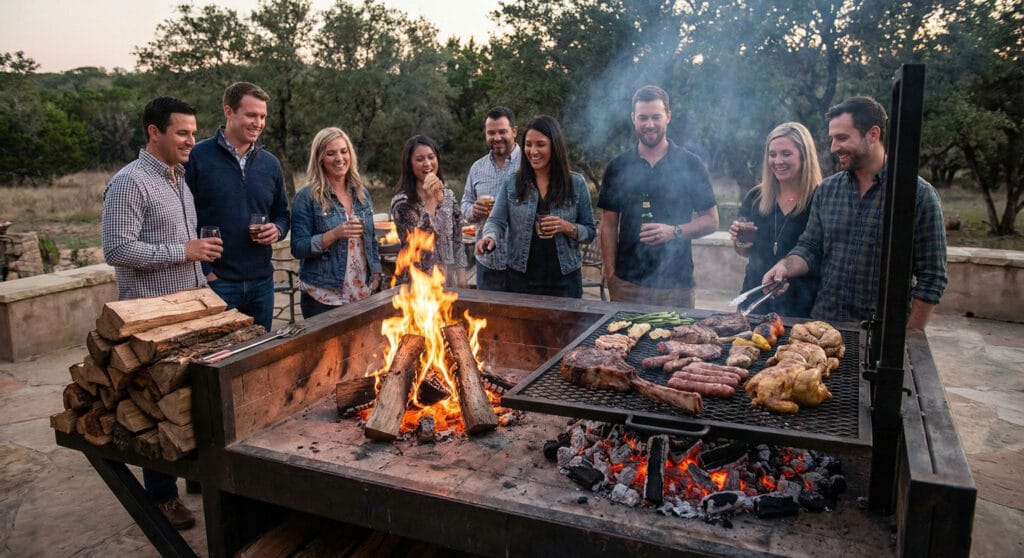
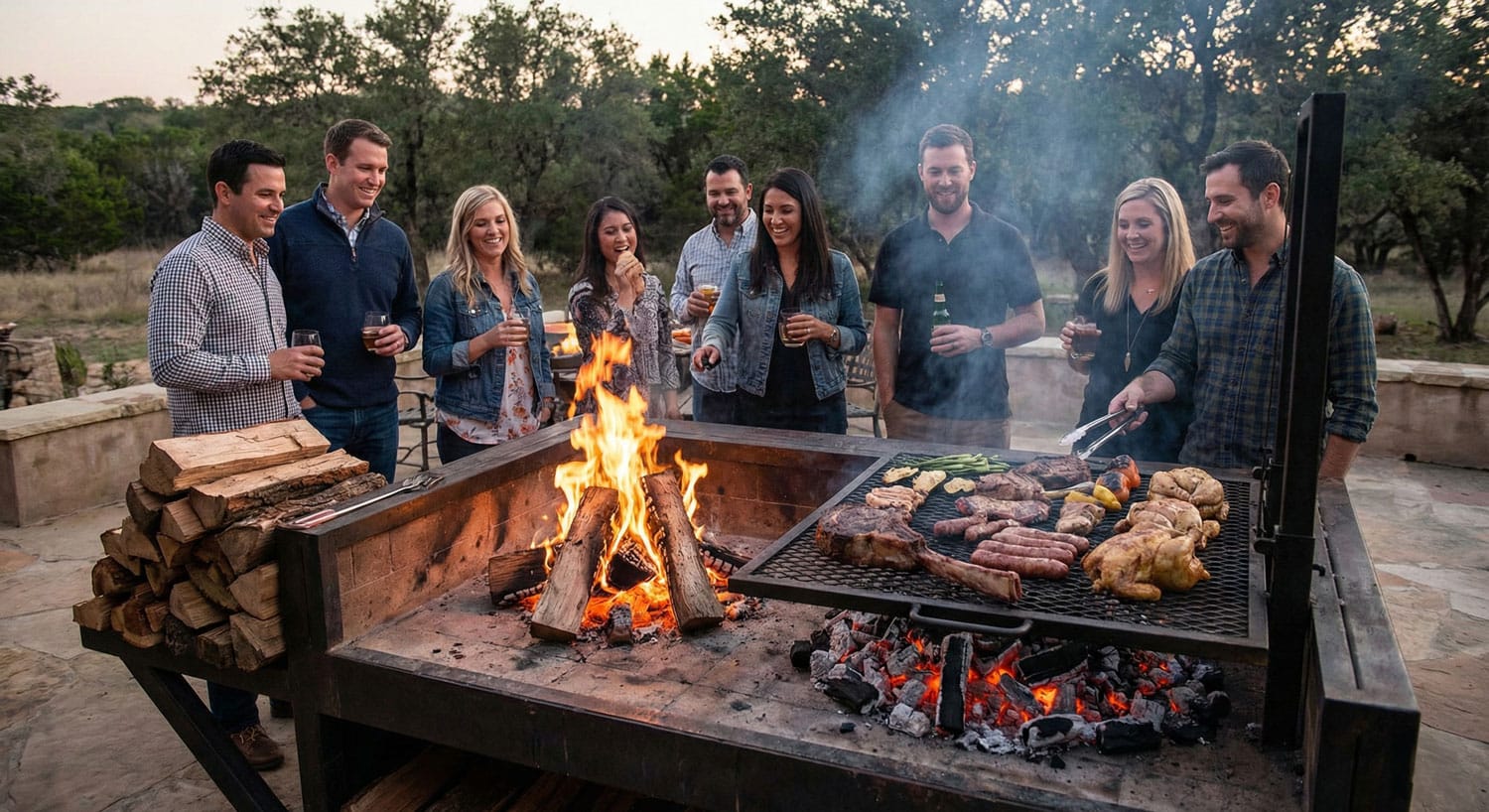
In South Africa, the fire acts as “Bush TV” because it draws people in. Guests congregate around a fire pit or a kettle grill in a way they never do around a gas stove. The cook is not hidden away in a kitchen. They are part of the conversation, the laughter, and the timing of the sun dropping.
Social media didn’t create this trend, but it revealed it. The crackle of coals and the glow at dusk are cinematic by nature, but the visuals are just a side effect of something genuinely enjoyable.
The Verdict
The rise of wood and charcoal is not a step backward. It is a step inward.
It is a reclaiming of flavour, patience, and connection. Whether you are searing a tomahawk over blistering coals or slow-roasting a lamb leg, you are participating in a ritual that spans human history.
Convenience feeds the stomach, but fire feeds the moment. The world is waking up to a simple truth: food tastes better when you have to work a little for it, and life feels warmer when you are standing next to a fire.
