
Blog, News, Tips and Tricks
How to Braai (or BBQ) the Perfect Aussie Steak – Cuts & Tips
Aug
Aussie Steak Cuts Explained: Sirloin vs Scotch Fillet, and the Best Cut for Your Braai
In South Africa, we call it a braai. In Australia, it’s a BBQ. The names differ, but the heart of it is the same: gathering around the fire to cook and connect.
Searing on a hardwood-fired braai grid or a stainless steel BBQ plate both come down to the same starting point. Know your cut of beef, and you are already most of the way to a steak that is tender, juicy, and worth remembering. This guide walks through the most popular Aussie steaks, then settles the question every meat counter sparks: sirloin or scotch fillet?
Choosing Your Cut: Know Your Beef
Every cut comes from a different part of the animal, with its own flavour, texture, and ideal cooking method. Let’s break down the most popular Aussie (and braai-friendly) steaks.
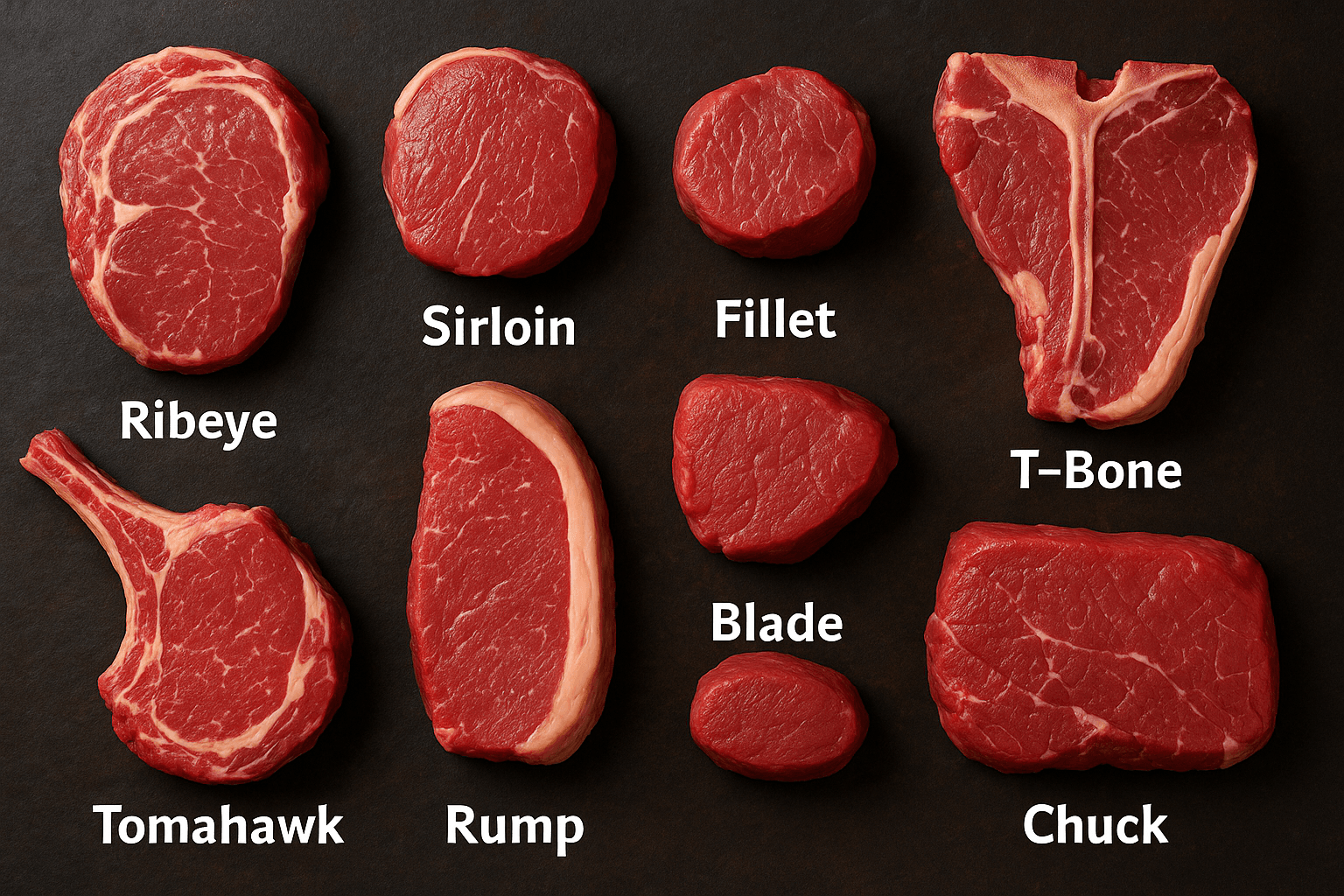
Ribeye / Scotch Fillet
- Where it’s from: The rib section, with heavy marbling. In Australia, the boneless ribeye is called scotch fillet.
- Flavour and texture: Rich, buttery, tender, thanks to the fat marbling that melts during cooking.
- Best cooking method: High-heat sear over coals for a braai, or preheated BBQ grill plates. Keep medium-rare to medium for maximum juiciness.
Sirloin / Porterhouse
- Where it’s from: The back of the animal, just before the rump. Porterhouse usually has the fat cap intact.
- Flavour and texture: Balanced flavour, moderately tender.
- Best cooking method: Great all-rounder for both braai and BBQ. Perfect for those who prefer a slightly leaner steak without losing flavour.
Fillet / Tenderloin
- Where it’s from: Under the backbone, a muscle that does little work.
- Flavour and texture: Incredibly tender, mild flavour.
- Best cooking method: Quick sear to medium-rare. On a braai, use direct high heat and finish quickly. On a BBQ, lid down for even heat.
T-Bone
- Where it’s from: Cross-cut from the short loin, includes both tenderloin and striploin, separated by the T-shaped bone.
- Flavour and texture: Best of both worlds, the tenderness of fillet plus the flavour of sirloin.
- Best cooking method: Needs strong heat to sear both sides. Works beautifully over braai coals for that charred edge.
Tomahawk
- Where it’s from: A ribeye with the full rib bone left on, often 5 to 6 cm thick.
- Flavour and texture: Dramatic presentation, ribeye flavour, juicy centre.
- Best cooking method: Reverse sear. Start over indirect heat (lid down on BBQ or high grill on braai), then finish with a hot sear to crust the outside.
Rump
- Where it’s from: The hindquarter, a large working muscle.
- Flavour and texture: Bold beefy flavour, firmer bite.
- Best cooking method: High-heat sear, best served medium-rare to keep tenderness. A budget-friendly crowd-pleaser.
Blade Steak
- Where it’s from: Shoulder area.
- Flavour and texture: Rich flavour but contains gristle. When cooked quickly it can be chewy, but slow-grilling or reverse-searing can make it tender.
- Best cooking method: Slice thin for quick braai skewers, or cook low and slow for BBQ sandwiches.
Chuck Steak
- Where it’s from: Neck and shoulder.
- Flavour and texture: Intense beef flavour, lots of connective tissue.
- Best cooking method: Not usually for quick steaks. Better for slow braai potjies, BBQ smoking, or shredding after long cooking.
Sirloin vs Scotch Fillet: Which Should You Braai?
These two turn up side by side at nearly every butcher, and they are the cuts people most often stand in front of, undecided. Both cook brilliantly over coals or on a plate, but they reward you in different ways. The short answer: reach for scotch fillet when you want rich, tender indulgence, and sirloin when you want a leaner steak with a firmer, honest beefy bite. Here is how they compare so you can decide with confidence at the counter.
Marbling and flavour
Scotch fillet comes from the rib section and carries heavy internal marbling. That fat melts as it cooks, basting the meat from the inside and giving you a rich, buttery mouthful. Sirloin sits further back along the loin and runs leaner, usually with a fat cap along one edge rather than fat woven all through it. The result is a cleaner, more upfront beef flavour with a bit more chew.
Texture on the plate
If tenderness is what you are chasing, scotch fillet has the edge. It stays soft and forgiving even if you drift slightly past your target. Sirloin is moderately tender and firmer in the bite, which many people actually prefer because it eats like a proper steak rather than melting away.

Free recipe ebook
Get our free braai recipe ebook
Braai Time: South African recipes, techniques and cuts, sent straight to your inbox.
How each one likes to be cooked
Scotch fillet loves a hot, fast sear and is happiest at medium-rare to medium, giving the marbling time to render. Watch for flare-ups as the fat drips onto the coals, and keep a cooler zone on the grid to move the steak away if the flames jump. Sirloin is the reliable all-rounder: sear it hard, then pull it at medium-rare so it keeps its juice, and slice against the grain to keep every mouthful tender. With coals, wait until they glow grey-white before you start, and keep your hand a safe distance above the grid to judge the heat, pulling away the moment it is uncomfortable rather than reaching in.
Price and everyday value
Scotch fillet usually sits at the pricier end because of its marbling and tenderness, so it earns its place at a special braai. Sirloin tends to be friendlier on the wallet while still delivering plenty of flavour, which makes it an easy pick when you are feeding a bigger group. Prices vary by butcher and season, so it pays to ask what is cut well on the day.
The verdict
Choose scotch fillet when you want indulgence and melt-in-the-mouth richness, and you do not mind paying a little more. Choose sirloin when you want a leaner steak with honest beefy flavour that still holds up beautifully on the fire, often at a friendlier price. Cooking for a crowd with mixed tastes? Put both on the grid and let everyone decide for themselves.
Fuel and Fire: Braai vs BBQ
Your choice of fuel shapes your flavour.
- Braai: Hardwood like ironbark or gidgee for deep smoke and steady heat. Wait until coals are grey-white before cooking, and keep long-handled tools nearby so your hands stay clear of the heat.
- Charcoal BBQ: Lump charcoal for a clean burn and good heat control.
- Gas BBQ: Preheat for 15+ minutes to achieve that instant sear. Check your gas connection for leaks before lighting, and keep the lid open when you ignite.
Seasoning Simply
Let the beef shine.
- Classic: Coarse salt, cracked black pepper.
- Braai twist: Peri-peri or dry rub for extra kick.
- BBQ twist: Garlic and rosemary-infused olive oil.
Cooking and Doneness
- Direct heat to sear, indirect to finish, especially for thick cuts like tomahawk or T-bone.
- Flip often for even cooking and juice retention.
- Internal temperatures: Rare 50°C, Medium-Rare 55°C, Medium 60°C, Medium-Well 65°C. Handle hot skewers and metal with tongs or a cloth, as they hold heat long after they leave the fire.
Rest and Serve
Always rest steaks 5+ minutes after cooking, loosely covered in foil. Serve with sides that speak to your crowd: pap en sous for braai fans, grilled corn or potato salad for BBQ lovers.
Final Word
Cooking ribeye over glowing coals or a sirloin on a stainless steel BBQ, the perfect steak is about more than meat. It’s about the people gathered around, the stories told, and the satisfaction of sharing something you’ve cooked to perfection.
Shop the Gear