Fire Season, News
Total Fire Bans in Australia: Can You Braai or BBQ? What You Need to Know
Aug

By Clinton Pretorius. First published September 2020; fully rewritten and fact-checked August 2026.
A word synonymous with Australia the world over, and especially with summertime in Australia, is “barbecue”.
For South Africans, though, the word is braai. As any South African will attest, nothing comes close to the woody, smoky aroma and flavour of a traditional fire-cooked braai, especially when it drifts across the backyard on a warm summer evening.
At OZ Braai HQ, we still hear the same concern every fire season: “Does this mean I cannot use my braai until autumn?”
The good news is that a fire season or Fire Danger Period is not the same thing as a Total Fire Ban. The important part is knowing what has been declared for your exact location, what fuel you plan to use, and whether a council, park or land manager has added stricter rules.
When we first published this article in 2020, the information was much harder to piece together. Since then, Australia has replaced its national fire danger rating system, and we have spent years building Fireban to bring official fire-ban information, ratings and location-specific guidance together in one place. This updated article reflects what we have learned, while still making one thing clear: always follow the current directions of your state or territory fire authority.
The myth that will not die
Every spring, the same conversation happens over a fence somewhere in Australia: “Fire season has started, mate. No braais until autumn.” It sounds sensible, but it is not how the system works.
There is no single Australian fire season that runs nationally from 1 October to 31 March. Fire Danger Periods, Fire Danger Seasons and permit periods vary by state, district and local conditions. A Total Fire Ban is a separate legal declaration, generally made for a particular day, period and area when conditions are especially dangerous or firefighting resources are already under pressure.
How often are bans declared? That varies significantly by year and location, so it is not responsible to promise that you can braai on a fixed percentage of summer days. The more useful principle is this: a fire season does not automatically mean a Total Fire Ban is in force.
Check the day, not just the season. Search your town, campsite or park at fireban.com.au, then confirm any applicable instructions with the named fire authority, council or land manager.
What changed since 2020: the old ratings are gone
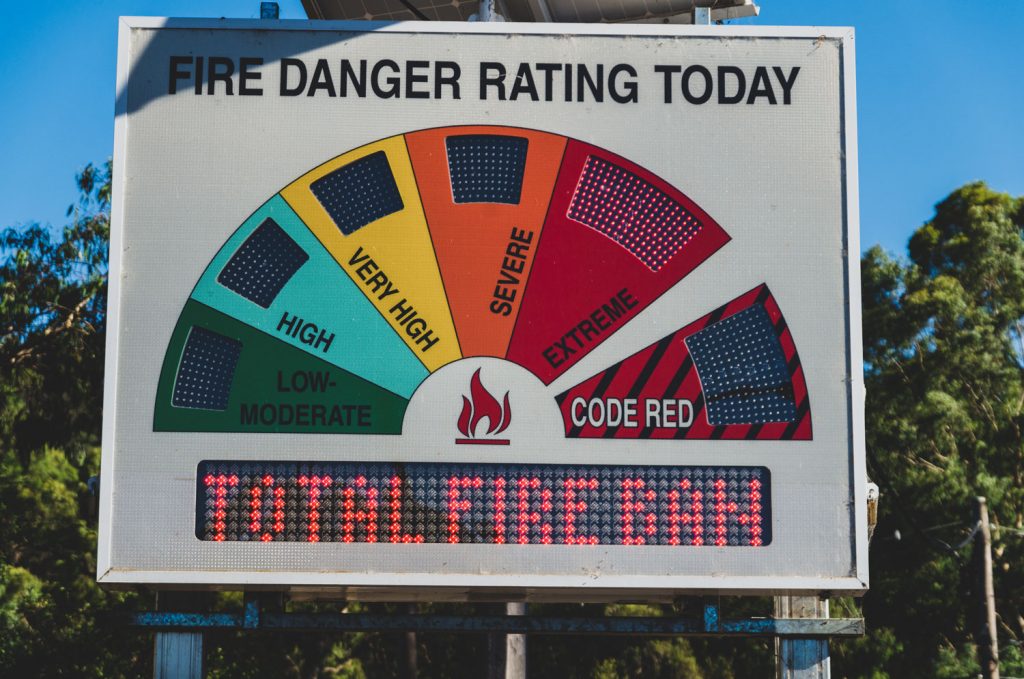
If you still think in terms of “Low-Moderate”, “Very High”, “Severe” or “Code Red”, you are remembering the old system. In September 2022, Australia introduced the Australian Fire Danger Rating System, or AFDRS. Every state and territory now uses the same four public rating levels:
- Moderate: plan and prepare
- High: be ready to act
- Extreme: take action now to protect life and property
- Catastrophic: for your survival, leave bushfire risk areas
On days with minimal risk, an area may display No Rating. The old six-level scale no longer applies.
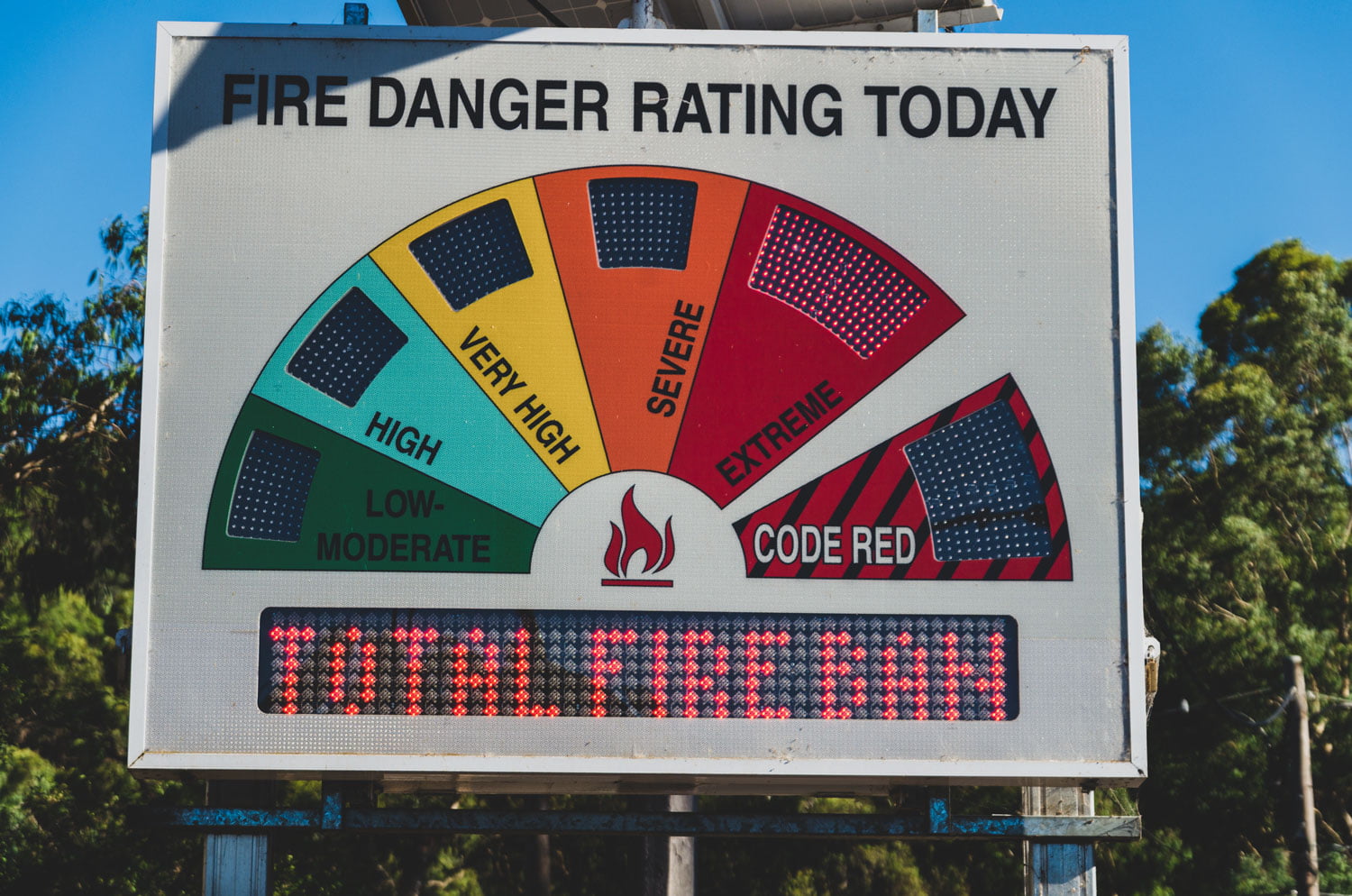
That distinction is the part people most often miss. A fire danger rating is not the same as a fire ban. The rating describes how dangerous a fire could become if one started. A ban tells you what activities are legally restricted for a stated place and time.
An Extreme day does not automatically create the same legal rules as a declared ban, and a ban may sometimes be declared for reasons beyond the rating alone. For a fuller explanation, read How Fire Danger Ratings and Total Fire Bans Are Decided.
Can I braai on a Total Fire Ban day?
The honest answer starts with another question: where are you, and what type of fuel or appliance are you using?
There is no single national barbecue rule for a ban day. Each state and territory has its own legislation, declarations, exemptions and terminology. Local councils, parks and campsite operators may impose additional restrictions.
New South Wales
NSW Rural Fire Service guidance is clear that solid-fuel barbecues and outdoor pizza ovens using wood, charcoal or heat beads cannot be used outside during a Total Fire Ban.
An electric barbecue may be used for cooking if it remains under the direct control of a responsible adult and there is no combustible material within two metres. A gas barbecue can also be used, but it must meet all the stated conditions, including adult supervision, a two-metre cleared area, an immediate and continuous water supply, and use either within 20 metres of a permanent private dwelling or in an approved designated picnic area.
Queensland
Queensland generally uses the term Local Fire Ban, rather than Total Fire Ban. Under the current Queensland Fire Department guidance, gas and electric barbecues may be used during a declared fire ban if they are suitably contained, cannot produce embers or ignite nearby ground fuels and vegetation, and are not left unattended.
The same current guidance says barbecues and pizza ovens using solid fuel are prohibited during a fire ban. Because each declaration and location may carry specific conditions, check the notice that applies to your council area before lighting anything.
Victoria
CFA guidance prohibits solid-fuel outdoor cookers on Total Fire Ban days. Gas and electric outdoor cookers can be used if they meet the published conditions, including a properly constructed or commercially manufactured appliance, a stable position, three metres of clearance from anything that can burn, constant adult supervision, and water immediately available.
The CFA conditions do not include the NSW rule requiring the barbecue to be within 20 metres of a home. That is a useful reminder not to carry one state’s rules across the border.
Northern Territory
The Northern Territory is unusually complex because it operates under two fire-law regimes. NT Government public guidance says a gas or coal barbecue may still be used during a fire ban, and allows a small fire used only for cooking or boiling water if there is a four-metre cleared area, continuous supervision and immediate extinguishment after use.
However, the Fire and Emergency Act 1996 applies inside declared emergency response areas. On a fire-ban day in one of those areas, section 32 overrides the normal meal-preparation exception unless the day’s declaration itself specifies an exemption. This is why Territorians should check the exact declaration and whether their location falls inside an emergency response area.
Free recipe ebook
Get our free braai recipe ebook
Braai Time: South African recipes, techniques and cuts, sent straight to your inbox.
Two rules of thumb
- Never assume the fuel does not matter. Rules for gas, electricity, wood, charcoal and briquettes can be different.
- Never assume another state’s rules apply to you. The same appliance can be lawful in one jurisdiction and prohibited in another on the same day.
These examples are a practical overview, not a substitute for the current declaration. Fire rules can change, and the most restrictive rule applying to your exact location wins.
Braaing away from home: parks are a different world
Everything above is mainly about general state or territory rules. The moment you load the Camp Braai into the ute, another layer can apply.
National parks, state forests, reserves, council recreation areas, caravan parks and private campgrounds can impose rules that are stricter than the surrounding district. A campground may prohibit all fires even when no district-wide ban is in force. Another may allow only a fixed electric barbecue or a specific type of self-contained gas appliance.
Before leaving home, check the exact park or campsite on the Fireban map, then read any alerts, signs and instructions from the relevant land manager. The guide Fire Ban vs Fire Permit vs Park Fire Ban explains why these different layers can apply at the same time.
The part that has not changed: the stakes
The original article warned that breaches can attract hefty fines and even imprisonment. That remains true. Penalties vary by jurisdiction and offence, and the consequences can become far more serious if an unlawfully lit or poorly managed fire escapes and causes damage, injury or loss of life.
No Sunday chops are worth risking someone’s home, a national park, a criminal charge or a firefighter’s life.
The practical checklist
- Check the day and exact location. Do not rely on a general idea of “fire season”.
- Check the appliance and fuel. Gas, electric, wood, charcoal and briquettes may be treated differently.
- Check every applicable layer. State or territory rules, council laws, park restrictions and campsite instructions can all matter.
- Supervise the braai at all times. Keep the required cleared area and firefighting water or equipment immediately available.
- Put it out completely. Do not leave until the fire, coals and ash are fully extinguished and cold.
The bottom line
Total Fire Bans and Local Fire Bans are real, serious legal restrictions. On a declared ban day, a wood or charcoal braai will be prohibited in many parts of Australia, and even gas or electric appliances may only be used under strict conditions.
But a fire season is not one continuous Total Fire Ban. On other days, knowing the actual rules for your state, council, park, location and fuel means you can enjoy a braai through the Australian summer legally and responsibly.
The truth was never “the braai is off until autumn”. The truth is: know which day it is, know where you are, and check before you light.
Full disclosure: Fireban is our own independent project. We built it because the rules were difficult to find and compare. It is free to use and brings official-source information into one place, but it is not a government service. Data and rules can change or be delayed, so always follow the current directions of the relevant fire authority, council or land manager.
This article provides general information only and is not legal advice. Fire restrictions and declarations can change at short notice. Always confirm the current position before lighting a fire or using an outdoor cooking appliance.
Official fire authority information
- NSW Rural Fire Service: Total Fire Ban rules
- CFA Victoria: Total Fire Bans and Fire Danger Ratings
- Queensland Fire Department: fire bans and restrictions
- DFES Western Australia: Total Fire Ban information
- CFS South Australia: Total Fire Bans and ratings
- Tasmania Fire Service: fire bans, permits and registrations
- ACT Emergency Services Agency: Total Fire Bans
- Northern Territory Government: fire bans and Fire Danger Periods
Shop the Gear
These OZ Braai products use solid fuel. Do not use them anywhere wood, charcoal, briquettes or other solid fuels are prohibited.