
Blog
Reading the Coals: How to Judge Braai Heat With Your Hand
Jun
Key takeaways
- The hand test reads coal heat: hold your palm about 12cm above the grid and count the seconds before you pull away.
- 2 to 4 seconds is high heat for searing steak; 5 to 7 is medium for wors and breads; 8 to 10 is low for slow cooking.
- Wait for grey ash over glowing coals, never flames, before you start cooking.
- Build a two-zone fire so you always have a searing side and a gentler side.
- Use your hand to read the fire and a thermometer like MEATER to read the inside of big cuts.
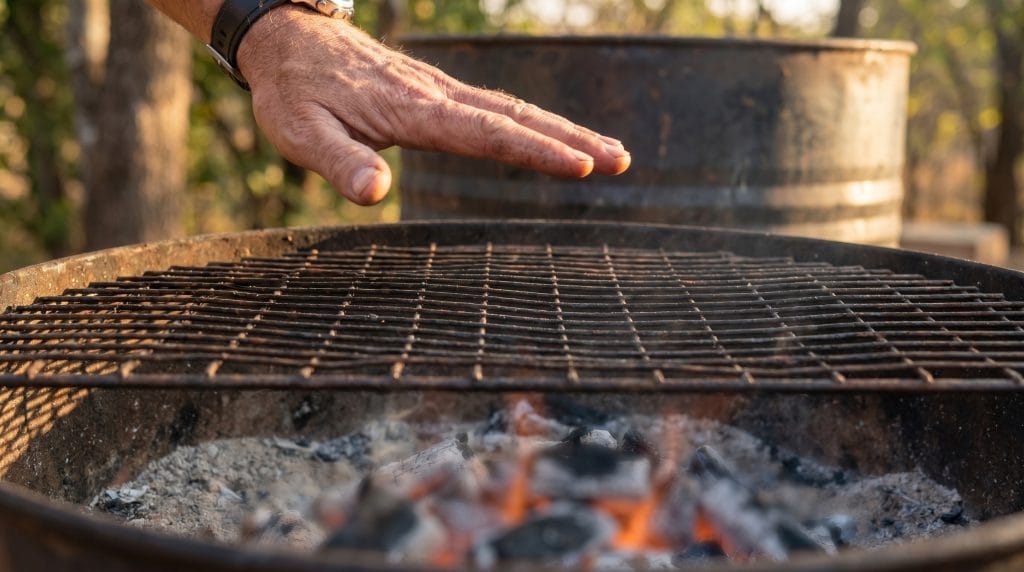
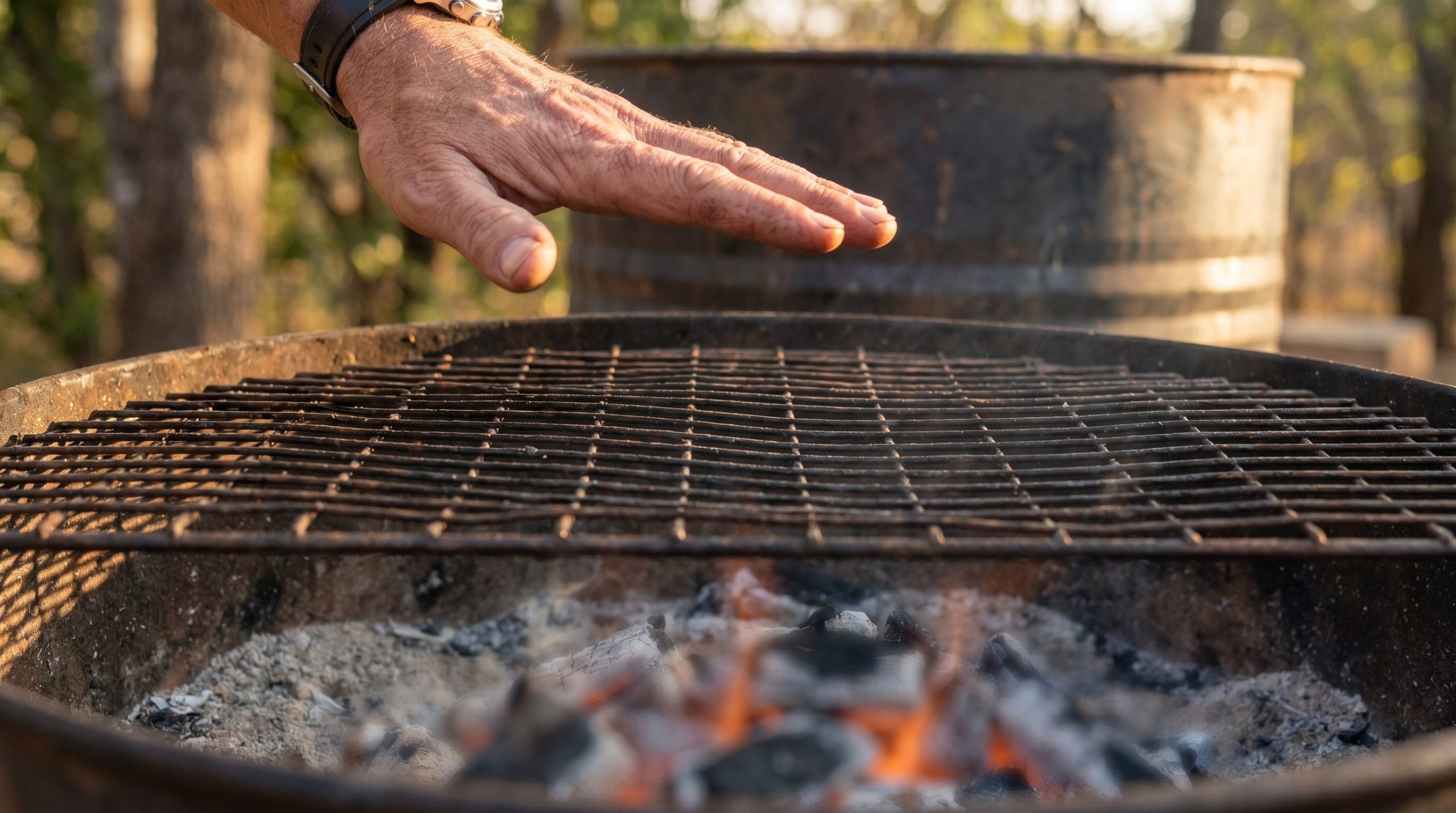
Hold your bare palm a hand’s width above the grid and count the seconds before you have to pull it away. That single move tells you more about whether your meat will sear or stew than any number scrawled on a hood thermometer. South African braai cooks have read their fire this way for generations, long before digital probes existed, and it still works because it measures the one thing that matters: how much heat is actually reaching the food.
Most open braais don’t have a built-in gauge, and that is no accident. A braai is about the coals, not the dial. So the skill worth learning first is not a recipe, it is how to read what is in front of you. Here is how the hand test works, what each result means, and how to match it to what you are cooking.
What is the braai hand test?
The hand test is a way to judge the heat of your coals by holding your open palm above the grid and counting how many seconds you can keep it there comfortably. The shorter the time before you flinch, the hotter the fire. Grilling guides describe it the same way: you hover your hand at roughly the height of a soft drink can standing on the grate, about 12 centimetres, and time yourself.
It is free, it is always on hand, and it reads heat at grid level, which is exactly where your food sits. A hood thermometer measures the air under a lid; on an open braai there is no lid, so your palm is the more honest instrument. Two rules keep it safe: pull your hand away the moment it stops being comfortable, never when it hurts, and make sure no sleeve, apron string or tea towel is dangling near the coals.
How many seconds means hot, medium or low?
Count the seconds you can hold your palm about 12 centimetres above the grid, then read off the heat. Pulling your hand away after 2 to 4 seconds means high heat, 5 to 7 seconds means medium, and 8 to 10 seconds means low. These ranges are the ones grilling and braai cooks have settled on:
- 2 to 4 seconds: high heat. Hard searing territory. Steaks, chops, picanha, lamb cutlets, anything you want crusted on the outside and pink within.
- 4 to 5 seconds: medium-high. Chicken pieces and fish, and the right level to finish thicker steaks and chops once they are seared.
- 5 to 7 seconds: medium. Boerewors, sausages, braaibroodjies, baking breads and puddings. Hot enough to colour, gentle enough not to scorch the skin before the inside is done.
- 8 to 10 seconds: low. Slow cooking, a potjie on the simmer, gently warming food through, or holding cooked meat while the rest catches up.
For a rough temperature equivalent, a one second flinch is around 450 to 500 degrees, three to four seconds sits near 350 degrees, and five to six seconds is closer to 250 degrees. You do not need to memorise numbers. The seconds are the language of the braai.
Coals tell you more than flames do
Wait for grey, glowing coals before you start, not flames. A fire that is still flaming is releasing volatile smoke and uneven heat that will soot your meat and flare around the fat. The moment to cook is when the coals have burned down to a steady orange glow under a thin coat of pale ash. That is when the heat is even and the smoke has turned sweet.
A charcoal chimney gets you there faster and without firelighter taint. Pack it, light it from below, and when the top coals are ashed over, tip them out and spread them. Good fuel matters too: dense lump charcoal and hardwood hold heat far longer than cheap briquettes that fade halfway through a cook. If you want coals that stay in the steak zone while you work, start with quality fuel and you will spend less time nursing the fire.
Build two zones, not one flat bed
Rake your coals so two thirds of the grid sits over a deep, hot bed and one third has few or no coals beneath it. This gives you a searing zone and a safe zone in the same fire. You sear over the hot side, then slide food across to the cooler side to finish through without burning, or to rest and hold it. It is the single habit that separates a controlled braai from a panicked one.
Free recipe ebook
Get our free braai recipe ebook
Braai Time: South African recipes, techniques and cuts, sent straight to your inbox.
The hand test is what makes two zones useful. Test the hot side, test the cool side, and you know exactly where to put each cut. A whole chicken that needs gentle heat goes to the 5 to 7 second area. A rump that needs a crust goes straight over the 2 to 4 second coals.
Match the heat to what you are cooking
Read the fire first, then choose where the food goes. A few examples from real braais:
- Steak. Sear over high, 2 to 4 second coals, then move to medium to finish. For a proper Aussie and South African cross, try a rump with shiraz steak sauce.
- Boerewors. Keep it over a medium, 5 to 7 second bed so the casing browns slowly without splitting. It is the heart of a proper boerewors roll.
- Chicken and fish. Medium-high to start, then patience. Skin needs time at a forgiving heat or it chars before the meat cooks.
- Breads and braaibroodjies. Medium coals only. Bread over a hot fire is black outside and raw within.
Where a thermometer still earns its place
The hand test reads the fire; a thermometer reads the meat. They do different jobs, and the best braai cooks use both. Your palm tells you the coals are ready to sear a thick piece of brisket or a rolled lamb loin, but only an internal reading tells you the centre has hit the temperature you want. A leave-in probe like the MEATER Pro takes the guesswork out of big cuts while your hand keeps managing the coals. For quick grilling of steaks and chops, the hand test alone is usually all you need.
FAQ
How far above the grid should I hold my hand? About 12 centimetres, the height of a soft drink can standing on the grate. Holding it lower exaggerates the heat and gives you a false reading, so keep it consistent every time.
Is the hand test accurate enough to cook by? Yes, for grilling it is reliable and it is how countless braais are run without any gauge. It measures heat at grid level where the food sits, which a hood thermometer cannot do on an open braai. For the internal doneness of large cuts, pair it with a meat thermometer.
Why wait for grey ash instead of flames? Flames mean the fuel is still off-gassing and the heat is uneven, which soots the meat and causes flare-ups. A coat of pale grey ash over glowing coals signals steady, even heat and clean smoke. That is your green light.
Does it work the same on a gas BBQ? The counting works, but gas heat is set by the burner dials and a hood thermometer, so you have less reason to use it. The hand test really comes into its own on charcoal and wood, where the heat shifts as the coals burn down.
Reading your fire is the one braai skill that improves everything else you cook. Learn the seconds, watch for grey ash, build two zones, and you will stop guessing. The meat will tell you that you got it right.
Shop the gear: set up a clean, hot bed with the Charcoal Chimney and Pure Flame Charcoal, cook over a solid Braai Grid, protect your hands with Extreme Heat Gloves, and nail the inside of big cuts with the MEATER Pro.