How to Use a Flambadou: Flaming Fat Basting, Step by Step
Key takeaways
- A flambadou is a cast iron cone you heat until glowing, then load with fat that melts, ignites and drips flaming over your food.
- Use rendered beef tallow, trimmed steak or lamb fat, or bone marrow. Solid fat works best; avoid pouring in loose oil.
- Baste in the last few minutes as a finishing move, not as the main cooking method.
- Heat the cone in the hottest coals for 10 to 15 minutes until it glows, and keep a clear, safe zone below with heat gloves on.
- Great on picanha, lamb chops, boerewors, oysters and even bread or charred cabbage.
A flambadou turns a lump of cold fat into a stream of flaming liquid that sears your food on contact. You heat a cast iron cone until it glows, drop in some fat, and moments later you are painting a steak with fire. Done well, it gives you a dark, crisp, deeply savoury crust that a basting brush and cold oil will never match. Done carelessly, it is just a light show. This guide is about doing it well.
What a flambadou actually does
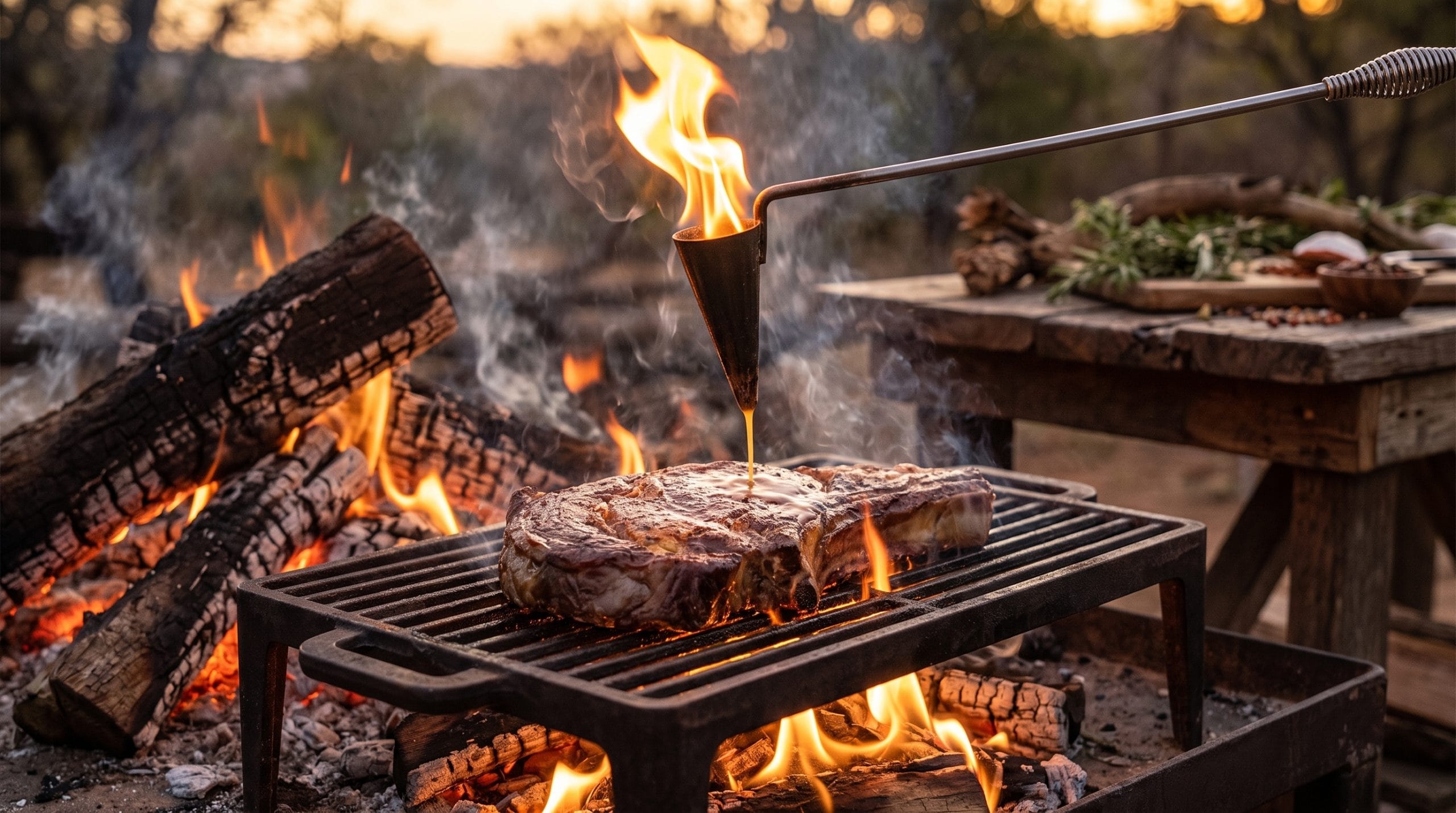
A flambadou is a cast iron cone on a long handle that you heat red hot in the coals, then load with fat so it melts, ignites and drips flaming over your food. The tool has genuine history: it is a medieval French basting tool, also called a flamboir, that was used to sear joints of meat over open fires and has been revived by fire cooks chasing flavour rather than nostalgia.
The clever part is the physics. The glowing iron does two jobs at once. It melts the fat and, because the fat bursts into flame as it renders and meets the air, it lands on the food already burning. That flaming fat blasts the surface with heat, tightens the crust and drives in a smoky, roasted flavour, all without turning the inside grey. On a braai that flexibility is huge: you never move the meat off the grid, and you decide exactly where and when to add flavour.
What you need before you start
You need a flambadou, a deep bed of hot coals, solid fat, and a bit of clear space to work safely. The OZ Braai Flambadou pairs a cast iron cone (for thermal mass, so it stays hot and ignites the fat instantly) with a stainless steel split shaft that will not rust and packs down for travel.
- A proper coal bed. Burn good hardwood charcoal down to glowing embers. You want steady radiant heat to bury the cone in, not a wall of flame.
- Solid fat. Rendered beef tallow, trimmed steak or lamb fat, bone marrow, bacon ends or firm compound butter. Solid fat melts, runs to the tip and lights cleanly. Skip loose oil, which pours straight through the hole and flares unpredictably.
- Heat protection. The cone glows and the handle gets hot. Wear heat gloves and keep guests, kids and anything flammable well back from the area under the cone.
- Something to baste. A steak, lamb chops, boerewors, oysters or bread sitting on a solid braai grid.
How to use a flambadou, step by step
The method is simple: heat the cone until it glows, cook your food nearly all the way, then load the fat and drip the flaming stream over the surface as a finish. Here is how it plays out at the braai.
- 1. Build the coals. Get a deep, even bed of glowing embers before you touch the flambadou. Tall flames are for later logs; for this you want mature coals.
- 2. Heat the cone. Nestle the cast iron cone directly into the hottest coals and leave it for 10 to 15 minutes until it glows a dull red. That heat is the whole point. A cool cone just melts fat; a glowing one ignites it on the way out.
- 3. Cook the food first. Braai your meat until it is just short of your target. For a thick steak that means pulling it around 50 to 52°C internal for medium rare, since the flaming fat will add more surface heat.
- 4. Load the fat. Lift the glowing cone clear of the coals, hold it upright and drop a knob of solid fat into the wide top opening. Within a few seconds it will melt, run to the tip and catch fire. Keep your face and free hand away from the opening as it lights.
- 5. Paint with fire. Hold the cone roughly 15 to 20 cm above the food and tilt so a controlled stream of flaming fat drips onto the surface. Work along fat caps and any pale, lagging edges. You will hear the sizzle straight away and watch the crust darken.
- 6. Reload and repeat. Dip the cone back into the coals for a minute to reheat, add more fat and go again until the crust is where you want it. Then rest the meat before slicing.
A calm word on safety: you are handling burning fat and a piece of glowing iron, so slow down. Baste over the grid or the fire, never over a timber table or dry grass, and never over your own arm. Move deliberately, keep the drip zone clear, and rest the hot cone on the coals or a fireproof surface between rounds. Treated sensibly it is no riskier than a chimney starter or a pan of hot oil.
Reading the cues: how to know it is working
Trust your eyes and ears more than the clock. Three cues tell you the flambadou is doing its job. First, the cone should glow dull red before you load it; if the fat only trickles out without igniting, it is not hot enough, so put it back in the coals. Second, the fat should light within a few seconds of hitting the tip and drip in a thin, flaming ribbon rather than a dribble. Third, the food should sizzle sharply and darken on contact. If nothing sizzles, your food surface is too wet or too cold, or the fat is not hot enough.

Free recipe ebook
Get our free braai recipe ebook
Braai Time: South African recipes, techniques and cuts, sent straight to your inbox.
Go in short bursts. A few seconds of flaming fat over a steak does a lot, and it is easy to overdo the smoke and tip into acrid rather than savoury. Baste, look, taste in your mind, then decide whether it needs another pass.
Best things to finish with a flambadou
The flambadou shines on anything with a surface worth crisping. A few reliable wins:
- Picanha and thick steaks. Fat cap up, baste the cap and edges with beef tallow for a glassy, caramelised crust. It is a natural match for Ricko’s picanha with chimichurri: rich fire-basted beef against a sharp green sauce.
- Lamb chops and racks. Lamb fat in the cone, aimed at the fat caps, gives a pronounced smoky lamb flavour and crisp edges.
- Boerewors. A quick finish once the wors is cooked through tightens the skin, deepens the colour and makes the aroma jump.
- Oysters and seafood. Flaming beef tallow dripped over freshly shucked oysters is a signature move in fire-driven kitchens. The same touch of smoky fat lifts firm fish beautifully, as in this Aussie barramundi braai.
- Bread and vegetables. Load herb butter and finish roosterkoek, sourdough or charred cabbage wedges. The butter toasts on contact for something well beyond ordinary garlic bread.
Care and cleaning
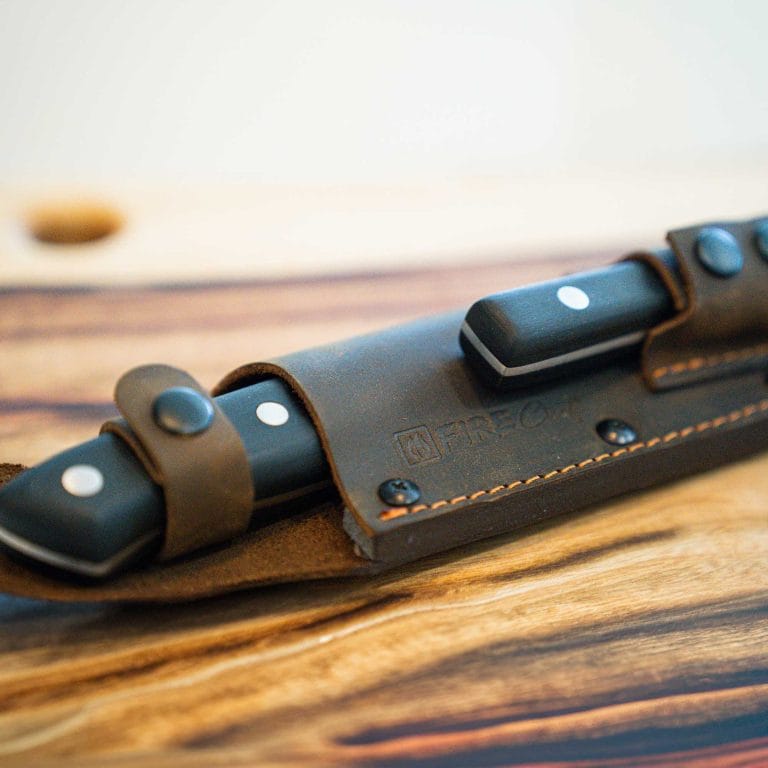
Let the cone cool, wipe it out, and keep the cast iron lightly oiled like any cast iron. Because the cone gets so hot in use, most of the fat burns off cleanly, so you rarely need harsh scrubbing. A quick tip: trim your fat neatly before the braai with a small, sharp knife such as the FireChef Chef’s Petty, and keep a stash of trimmed fat in the freezer so you always have something to load the cone with. When handling raw fat and meat, keep separate boards and wash your hands and knife before they touch anything cooked.
Frequently asked questions
What fat should I use in a flambadou? Solid rendered fat works best: beef tallow, trimmed steak or lamb fat, bone marrow, or firm compound butter. It melts, runs to the tip and ignites cleanly. Avoid pouring loose oil into the cone, as it runs straight through and can flare unpredictably.
How hot does the cone need to be? Hot enough to glow a dull red, usually 10 to 15 minutes in a deep bed of coals. If the fat only melts and drips without catching fire, the cone is not hot enough yet. Return it to the hottest part of the fire and wait.
Is a flambadou just a gimmick? No. It is a genuine medieval French basting tool that survived in regional cooking and has been revived by serious fire cooks. The flaming fat sears the surface and adds smoky flavour in a way a brush and cold fat cannot. The spectacle is real, but so is the result.
Is it dangerous to use? It involves burning fat and a piece of glowing iron, so treat it with respect, but it is no more dangerous than a chimney starter or a pan of hot oil if you are sensible. Wear heat gloves, keep people and anything flammable well back from the drip zone, and never leave the hot cone unattended.
Can I use a flambadou on gas or a kettle? It works best over a real coal or wood fire, where you can bury the cone in the embers to get it glowing. On a gas grill you have nowhere to properly heat the iron, so results are poor. A charcoal braai is the natural home for it.
Shop the gear: the OZ Braai Flambadou, a solid braai grid, a bag of gidgee charcoal and a pair of extreme heat gloves are all you need to start painting with fire.

 Braais and BBQs
 FireChef knives
 Braai spices
 Camp cooking
 Bundles
 Gift cards