

Blog
FireChef Complete Camp Knife Bundle Review: The Last Braai Knife Set You’ll Buy
Jun
Key takeaways
- The bundle is five knives in a real leather roll, with steel matched to each blade’s job.
- Three big blades (chef’s knife, machete, cleaver) are carbon steel for a finer, longer-holding edge.
- The fillet and petty are German stainless steel to resist salt water, brine and casual shared handling.
- Carbon blades need a quick dry-and-oil after use; the stainless blades are low maintenance.
- Best for the cook who braais, fishes and camps and wants one roll for all of it.
If you are deciding on one knife set to carry from the kitchen to the coast to the campsite, the FireChef Complete Camp Bundle is built to be the one you stop replacing. It pairs five working knives in a real leather roll, and the clever part is that the steel is matched to the job: three big carbon steel blades for raw cutting performance, and two German stainless blades where rust and rough handling are the real enemy. That mix is the whole argument, and it is why this set tends to be the last one people buy.
This guide breaks down what is in the roll, why each blade is the steel it is, and who should buy it. No hype, just the reasoning a braai cook actually uses.
What you get, and why the steel choice matters
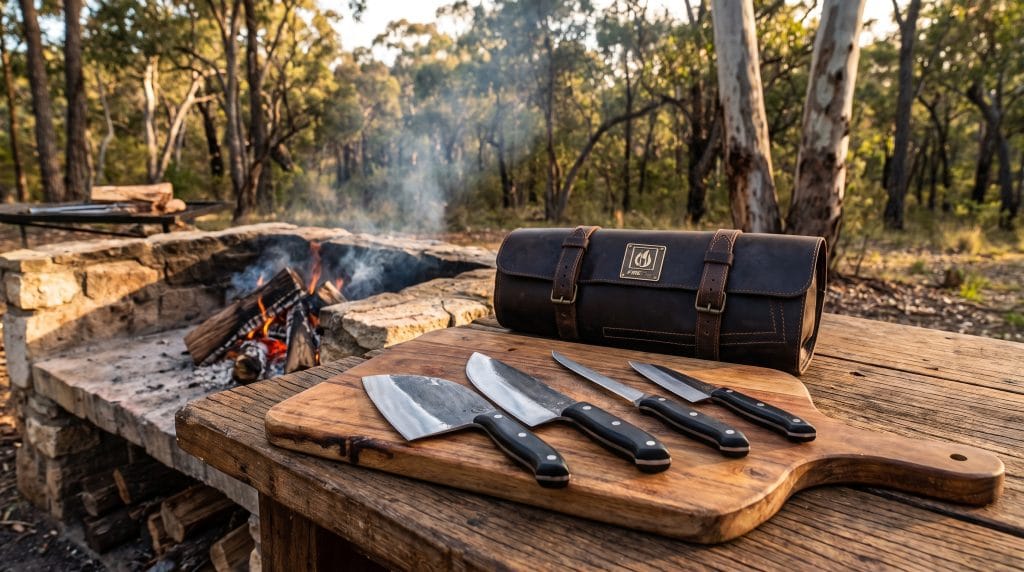
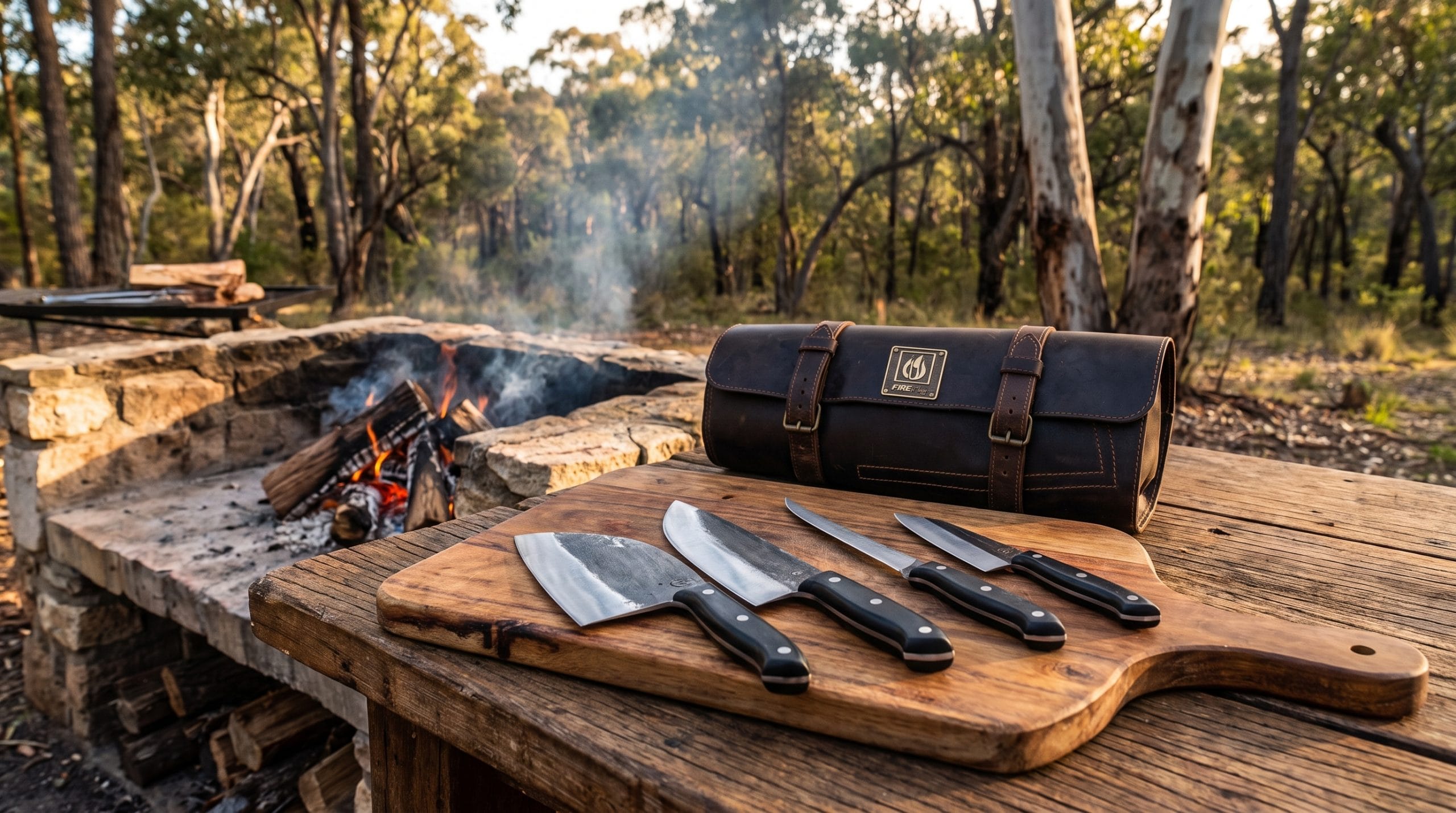
The bundle is five knives in a stitched leather roll, split deliberately between two types of steel. The three larger blades are carbon steel, chosen for edge performance. The fillet and the petty are German stainless steel, chosen for corrosion resistance and forgiveness. Here is the quick version before we get into the why.
- Carbon steel (the three big blades): the chef’s knife, the machete and the cleaver. These take a keener edge and hold it through heavy board work, breaking down meat and chopping.
- German stainless steel (the two small blades): the fillet and the petty. Stainless shrugs off moisture far better, which matters around fish, brine and casual handling.
- Real leather roll: a proper hide roll that protects the edges, travels well and ages with use rather than falling apart.
Why the three big knives are carbon steel
Carbon steel earns its place on the blades that do the hardest cutting. It generally takes a finer edge and holds that edge longer than most stainless, so the chef’s knife, machete and cleaver stay sharper through a long session of portioning meat, chopping veg and working a board. When you are pushing through a brisket point or breaking down a lamb shoulder, that edge retention is what you feel in your hand.
The trade is honest: carbon steel will rust if you leave it wet, and it develops a patina over time, which is normal and even protective. The fix is a thirty second habit. Wipe the blade dry after use and give it a light film of food grade oil before it goes back in the roll. A caution worth repeating: these are properly sharp blades, so cut on a stable board, keep your guiding fingers tucked back behind your knuckles, and never try to catch a falling knife. Let it drop and step back.
Why the fillet and petty are German stainless steel
The fillet and petty are stainless for two practical reasons: water and people. A fillet knife lives around moisture. If you are filleting fish off the rocks or at the campsite, the blade meets salt water and brine, and that is exactly the environment that punishes carbon steel fastest. Stainless steel resists corrosion far better, so the fillet blade survives the conditions that would have a carbon edge spotting with rust before you have finished cleaning up.
The petty is stainless for a different reason. A petty is a small utility knife, longer and more capable than a paring knife but just as handy for peeling, trimming, slicing fruit and the dozen little jobs that come up at a braai. Because it is the knife you reach for constantly, it is also the one that gets borrowed, passed around the table and, let us be honest, not always looked after. Stainless is the forgiving choice for a blade that will not always get the careful dry-and-oil treatment a carbon blade demands. You want the small shared knife to handle a bit of neglect without complaint.
Handling fish safely: raw fish and its juices spread bacteria easily, so keep a separate board for it where you can, wash hands and blade in hot soapy water before they touch anything else, and keep the catch cold until you cook.
Carbon steel vs German stainless: the honest comparison
| Factor | Carbon steel (big blades) | German stainless (fillet, petty) |
|---|---|---|
| Edge sharpness and retention | Takes a finer edge, holds it longer through heavy work | Very good, slightly softer, easy to touch up |
| Corrosion resistance | Will rust if left wet, develops a patina | Resists rust well, ideal around water and brine |
| Care needed | Dry and oil after every use | Low maintenance, forgiving of casual handling |
| Best jobs | Breaking down meat, chopping, board work | Filleting fish, peeling, trimming, shared tasks |
Who should buy the Complete Camp Bundle
This set suits the cook who wants one roll for everything: backyard braai, fishing trips and camping. You get the cutting performance of carbon where it counts and the resilience of stainless where conditions are harsh or the knife gets shared. If you mostly cook at home and never go near water or a campsite, a smaller carbon focused set may be all you need. But if your cooking moves around and meets fish, brine and shared hands, the mixed-steel logic of this bundle is genuinely the smarter buy.

Free recipe ebook
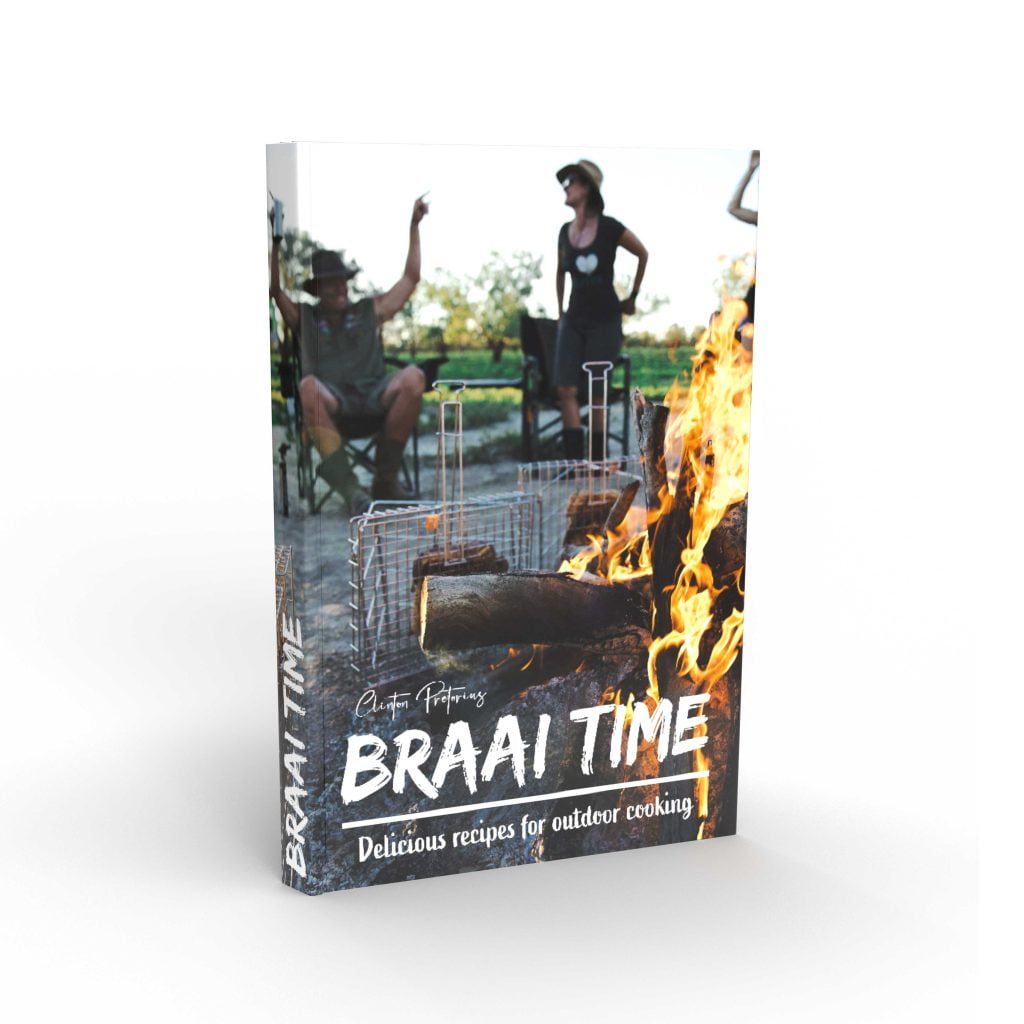
Get our free braai recipe ebook
Braai Time: South African recipes, techniques and cuts, sent straight to your inbox.
It also travels honestly. The leather roll keeps the edges protected and the kit together, so you are not throwing loose blades into a tackle box or an esky.
Looking after the bundle so it lasts
The carbon blades need the simple ritual: wash, dry thoroughly, then a light coat of food grade mineral oil before storage. The stainless fillet and petty are far more forgiving but still earn a wash and dry, especially after salt water. Keep all five in the roll rather than loose in a drawer, and touch up the edges with a sharpener or stone when they start to drag rather than waiting until they are blunt. Treated this way, there is no honest reason this set should not outlast a decade of braais.
For the carbon blades specifically, the Carbon Steel Knife Maintenance Kit covers the dry-and-oil habit in one tidy package.
Frequently asked questions
Is carbon steel better than stainless steel for knives? Neither is simply better; each is better at a job. Carbon steel takes and holds a finer edge and sharpens easier, which suits hard-working big blades, while stainless steel resists rust and handles moisture and rough treatment, which suits a fillet knife near water and a shared petty. The Complete Camp Bundle uses both so each blade plays to its strength.
Will the carbon steel knives rust? They can if left wet, and they will form a patina over time, which is normal. Wiping them dry and adding a light film of food grade oil after use keeps rust away and the patina is actually protective.
What is a petty knife used for? A petty is a small utility knife that bridges a paring knife and a chef’s knife. It handles peeling, trimming, slicing fruit, herbs and small precise jobs, which is why it is the most borrowed knife at the table and why a forgiving stainless blade makes sense for it.
Can I use the fillet knife for saltwater fish? Yes, that is exactly why it is German stainless steel. Salt water and brine corrode carbon steel quickly, so a stainless fillet blade is the sensible choice for cleaning your catch. Rinse and dry it afterwards regardless, since no steel enjoys being left wet.
Is the leather roll real leather? Yes, it is a genuine leather roll that protects the blades, travels well and ages with use rather than wearing out like a fabric pouch.
Shop the gear
Start with the FireChef Complete Camp Bundle for the full five-knife roll, or build around the pieces you use most with the FireChef Chef’s Fillet, the FireChef Chef’s Petty and the FireChef Chef’s Knife. Keep the carbon blades happy with the Carbon Steel Knife Maintenance Kit. Then put them to work on braaied fish with tacos and coleslaw or Ricko’s picanha with chimichurri.

Nice article! This definitely helped me learn more about the FireChef knife set
Thanks for the feedback Ines.